
- Page 1
200 XC‑W US 250 EXC EU 250 EXC AU 250 EXC Six Days EU 250 XC‑W US 300 EXC EU 300 EXC AU 300 EXC Six Days EU 300 EXC BR 300 XC‑W US 300 XC‑W Six Days US Art. no. 3213334en… - Page 3
KTM accepts no liability for delivery options, deviations from illustrations and descriptions, misprints, and other errors. -
Page 4: Table Of Contents
Braking …………36 6.11 Electric starter button Stopping, parking……….37 (All 200/250/300 EU/US models, Transport …………37 300 EXC BR)……….15 Refueling …………38 6.12 Electric starter button (EXC AU) ……. 15 10 SERVICE SCHEDULE ……….39 6.13 Overview of indicator lamps (All EXC models) ..15 10.1…
- Page 5
12.9 Removing the lower triple clamp 13.9 Checking the free travel of foot brake lever ..85 (200 XC‑W US, 250 XC‑W US, 300 EXC BR, 13.10 Adjusting the basic position of the foot brake 300 XC‑W US)……….56 lever ………… - Page 6
250 EXC AU ……….132 22.10.7 250 XC‑W US……….. 132 22.10.8 300 EXC EU, 300 EXC Six Days EU … 132 22.10.9 300 EXC AU ……….133 22.10.10 300 EXC BR ……….133 22.10.11 300 XC‑W US, 300 XC‑W Six Days US..133… -
Page 7: Means Of Representation
All work marked with this symbol requires specialist knowledge and technical understanding. In the interest of your own safety, have these jobs performed by an authorized KTM workshop. There, your motorcycle will be opti- mally cared for by specially trained experts using the specialist tools required.
-
Page 8: Safety Advice
Use definition — intended use (All EXC models) KTM sport motorcycles are designed and built to withstand the normal stresses and strains of competitive use. The motorcycles comply with currently valid regulations and categories of the top international motorsport organizations.
-
Page 9: Safe Operation
Keep the Owner’s Manual in an accessible place to enable you to refer to it as needed. If you would like to know more about the vehicle or have questions on the material you read, please contact an authorized KTM dealer.
-
Page 10: Important Notes
Guarantee, warranty The work prescribed in the service schedule must be carried out by an authorized KTM workshop only and confirmed in the customer’s Service & Warranty Booklet and in the KTM Dealer.net; otherwise, all warranty claims will be void. No warranty claims can be consid- ered for damage resulting from manipulations and/or alterations to the vehicle.
-
Page 11: View Of Vehicle
VIEW OF VEHICLE View of vehicle, front left (example) 102249-10 Hand brake lever ( p. 13) Light switch ( p. 14) Kill switch ( p. 13) Turn signal switch ( p. 14) Horn button ( p. 14) Kill switch ( p.
-
Page 12: View Of Vehicle, Rear Right (Example)
VIEW OF VEHICLE View of vehicle, rear right (example) 102250-10 Filler cap Throttle grip ( p. 13) Chassis number ( p. 11) Kick starter ( p. 18) Foot brake lever ( p. 18) Level viewer for brake fluid, rear…
-
Page 13: Serial Numbers
SERIAL NUMBERS Chassis number The chassis number is stamped on the right side of the steering head. 401946-10 Type label The type label is fixed to the front of the steering head. 401946-10 Key number (All EXC models) …
-
Page 14: Shock Absorber Part Number
SERIAL NUMBERS Shock absorber part number The shock absorber part number is stamped on the top of the shock absorber above the adjusting ring on the engine side. 0 0 1 401948-10…
-
Page 15: Controls
CONTROLS Clutch lever (All 125/200 models) The clutch lever is fitted on the left side of the handlebar. The clutch is hydraulically operated and self-adjusting. 102251-10 (All 250/300 models) The clutch lever is fitted on the left side of the handlebar. The clutch is hydraulically operated and self-adjusting.
-
Page 16: Kill Switch (All Xc-W Models)
CONTROLS Kill switch (All XC-W models) The kill switch is fitted on the left side of the handlebar. Possible states in basic position – In this position, the ignition circuit is closed and • Kill switch the engine can be started. pressed –…
-
Page 17: Emergency Off Switch (Exc Au)
Ignition on – In this position, the ignition circuit is closed, and the engine can be started. 602728-10 6.11 Electric starter button (All 200/250/300 EU/US models, 300 EXC BR) The electric starter button is fitted on the right side of the handlebar.
-
Page 18: Opening The Filler Cap
CONTROLS 6.15 Opening the filler cap Danger Fire hazard Fuel is highly flammable. – Never refuel the vehicle near open flames or burning cigarettes, and always switch off the engine first. Be careful that no fuel is spilt, especially on hot vehicle components. Clean up spilt fuel immediately. –…
-
Page 19: Fuel Tap
CONTROLS 6.17 Fuel tap The fuel tap is on the left side of the fuel tank. Tap handle on the fuel tap is used to open or close the supply of fuel to the carbu- retor. Possible states Fuel supply closed OFF – Fuel cannot flow from the fuel tank to the carburetor. •…
-
Page 20: Kick Starter
CONTROLS 6.20 Kick starter Kick starter is fitted on the right side of the engine. The top part of the kick starter pivots. Info 0 0 1 Before riding, swing the top part of the kick starter inward toward the engine. 401954-10 6.21 Foot brake lever…
-
Page 21: Locking The Steering (All Exc Models)
CONTROLS 6.24 Locking the steering (All EXC models) Note Danger of damage The parked vehicle may roll away or fall over. – Always place the vehicle on a firm and even surface. – Park the vehicle. – Turn the handlebar as far as possible to the right. –…
-
Page 22: Speedometer
SPEEDOMETER Speedometer overview – Press the button to control different functions. – Press the button to control different functions. Info When the vehicle is delivered, only the SPEED/H and SPEED/ODO display modes are activated. 401761-01 Activation and test Activating the speedometer The speedometer is activated when one of the buttons is pressed or an impulse comes from the wheel speed sensor.
-
Page 23: Setting The Speedometer Functions
SPEEDOMETER Setting the speedometer functions Info When the vehicle is delivered, only the SPEED/H and SPEED/ODO display modes are activated. Condition The motorcycle is stationary. – Repeatedly press the button briefly until H appears at the bottom right of the display.
-
Page 24: Display Mode Speed (Speed)
SPEEDOMETER – Repeatedly press the button briefly until LAP appears at the bottom right of the display. – Briefly press the button LAP 1 appears on the left side of the display. – The laps 1–10 can be viewed with the button –…
-
Page 25: Setup Menu
SPEEDOMETER Setup menu Condition • The motorcycle is stationary. – Repeatedly press the button briefly until H appears at the bottom right of the display. – Press the button for 2–3 seconds. The Setup menu displays the active functions. Info Repeatedly press the button briefly until the desired function is reached.
-
Page 26: Display Mode Speed/Clk (Time)
SPEEDOMETER 7.11 Display mode SPEED/CLK (time) – Repeatedly press the button briefly until CLK appears at the bottom right of the display. The time is shown in display mode CLK. Press the button The display changes to the Setup menu of the clock. for 2–3 seconds.
-
Page 27: Viewing The Lap Time
SPEEDOMETER 7.14 Viewing the lap time Condition • The motorcycle is stationary. – Repeatedly press the button briefly until LAP appears at the bottom right of the display. – Briefly press the button Press the button The stop watch and the lap time are reset. for 2–3 seconds.
-
Page 28: Display Mode Speed/Tr2 (Trip Master 2)
SPEEDOMETER 7.17 Display mode SPEED/TR2 (trip master 2) – Repeatedly press the button briefly until TR2 appears at the top right of the dis- play. TR2 (trip master 2) runs constantly and counts up to 999.9. Press the button Clears the values TR2 and A2. for 2–3 seconds.
-
Page 29: Display Mode Speed/A2 (Average Speed 2)
SPEEDOMETER 7.20 Display mode SPEED/A2 (average speed 2) – Repeatedly press the button briefly until A2 appears at the top right of the dis- play. A2 (average speed 2) shows the average speed on the basis of the current speed if the stop watch S2 (stop watch 2) is running.
-
Page 30: Table Of Functions
SPEEDOMETER 7.23 Table of functions Display Press the but- Briefly press the Press the but- Briefly press the Wait 3–5 sec- Wait 10–12 sec- for 2–3 button for 2–3 button onds onds seconds. seconds. Display mode The display Next display No function No function SPEED/H (service…
-
Page 31: Table Of Conditions And Menu Activation
SPEEDOMETER 7.24 Table of conditions and menu activation Display The motorcycle is Menu can be acti- stationary. vated Display mode SPEED/H (service hours) • Setup menu • Setting the unit of measurement • Setting the clock • Display mode SPEED/LAP (lap time) •…
-
Page 32: Preparing For Use
When using your motorcycle, remember that others may feel disturbed by excessive noise. – Make sure that the pre-delivery inspection work has been carried out by an authorized KTM workshop. You receive a delivery certificate and the Service and Warranty Booklet at vehicle handover.
-
Page 33: Running In The Engine
PREPARING FOR USE – Hold the handlebar firmly with both hands and keep your feet on the footrests when riding. – If you carry any baggage, make sure it is fixed firmly as close as possible to the center of the vehicle and ensure even weight dis- tribution between the front and rear wheels.
-
Page 34: Preparations For Riding On Dry Sand
Info Read the KTM PowerParts installation instructions. – Adjust the carburetor jetting and setting. Info 600871-01 Your authorized KTM workshop can recommend the right carburetor tuning. – Clean the chain. Chain cleaner ( p. 144) – Mount the steel sprocket.
-
Page 35: Preparations For Riding On Wet And Muddy Surfaces
Info Read the KTM PowerParts installation instructions. – Adjust the carburetor jetting and setting. Info 600870-01 Your authorized KTM workshop can recommend the right carburetor tuning. – Clean the chain. Chain cleaner ( p. 144) – Mount the steel sprocket.
-
Page 36: Preparing For Riding At Low Temperatures Or In Snow
Mount the rain cover for the air filter. Rain cover for air filter (59006021000) Info Follow the KTM PowerParts mounting instructions. – Adjust the carburetor jetting and setting. Info 600870-01 Your authorized KTM workshop can recommend the right carburetor tuning.
-
Page 37: Riding Instructions
RIDING INSTRUCTIONS Checks and maintenance work when preparing for use Info Before riding the vehicle, always check its condition and operating safety. The vehicle must be in perfect technical condition when used. – Check the gear oil level. ( p. 111) –…
-
Page 38: Start Off
Do not change into a low gear at high engine speed. The engine races and the rear wheel can lock up. Info If you hear unusual noises while riding, stop immediately, switch off the engine, and contact an authorized KTM workshop. First gear is used for starting off or for steep inclines.
-
Page 39: Stopping, Parking
RIDING INSTRUCTIONS – On sandy, wet or slippery surfaces, use the rear brake. – Braking should always be completed before you go into a bend. Change down to a lower gear appropriate to your road speed. Stopping, parking Warning Risk of misappropriation Usage by unauthorized persons. –…
-
Page 40: Refueling
Super unleaded, type C (ROZ 95/RON 300 EXC BR) 95/PON 91 mixed with 2-stroke engine 400382-10 oil, 1:60) ( p. 142) (300 EXC BR) Total fuel tank 10 l (2.6 US gal) Super unleaded (95 octane) mixed capacity, approx. with 2-stroke engine oil (1:60) (EXC AU, XC‑W,…
-
Page 41: Service Schedule
● ● Check the idle. ● ● Final check: Check the vehicle for safe operation and take a test ride. ● ● Make the service entry in the KTM Dealer.net and in the Service and Warranty Booklet. ● Periodic interval…
-
Page 42: Service Work (As Additional Order)
SERVICE SCHEDULE 10.2 Service work (as additional order) Annually Every 80 operating hours/every 40 operating hours when used for motorsports Every 40 operating hours Once after 10 operating hours ● Change the front brake fluid. ● Change the rear brake fluid. ●…
-
Page 43: Tuning The Chassis
Caution Danger of accidents Disassembly of pressurized parts can lead to injury. – The shock absorber is filled with high density nitrogen. Adhere to the description provided. (Your authorized KTM workshop will be glad to help.) Info The low-speed setting can be seen during the slow to normal compression of the shock absorber.
-
Page 44: Adjusting The High-Speed Compression Damping Of The Shock Absorber
Caution Danger of accidents Disassembly of pressurized parts can lead to injury. – The shock absorber is filled with high density nitrogen. Adhere to the description provided. (Your authorized KTM workshop will be glad to help.) Info The high-speed setting can be seen during the fast compression of the shock absorber.
-
Page 45: Measuring The Sag Of The Unloaded Rear Wheel
TUNING THE CHASSIS – Turn adjusting screw clockwise up to the last perceptible click. Info Do not loosen nut – Turn counterclockwise by the number of clicks corresponding to the shock absorber type. Guideline (All 125/200 models) B00792-10 Rebound damping Comfort 28 clicks…
-
Page 46: Checking The Riding Sag Of The Shock Absorber
Caution Danger of accidents Disassembly of pressurized parts can lead to injury. – The shock absorber is filled with high density nitrogen. Adhere to the description provided. (Your authorized KTM workshop will be glad to help.) Info Before changing the spring preload, make a note of the present setting, e.g., by measuring the length of the spring.
-
Page 47: Adjusting The Riding Sag
TUNING THE CHASSIS Info Depending on the static sag and/or the riding sag, it may be necessary to increase or decrease the spring preload. – Tighten screw Guideline Screw, shock absorber adjusting ring 5 Nm (3.7 lbf ft) Finishing work –…
-
Page 48: Adjusting The Compression Damping Of The Fork
Guideline (125 EXC EU, all 200 models) Compression damping Comfort 22 clicks Standard 20 clicks Sport 18 clicks (250/300 EXC EU/AU, XC-W US, 300 EXC BR) Compression damping Comfort 22 clicks Standard 20 clicks Sport 18 clicks Info Turn clockwise to increase damping; turn counterclockwise to reduce damping.
-
Page 49: Adjusting The Rebound Damping Of The Fork
(125 EXC EU, 200 EXC EU, 200 EXC AU) 102256-10 Rebound damping Comfort 20 clicks Standard 18 clicks Sport 16 clicks (250/300 EXC EU, 250/300 EXC AU) Rebound damping Comfort 20 clicks Standard 18 clicks Sport 16 clicks Info Turn clockwise to increase damping; turn counterclockwise to reduce damping.
-
Page 50: Adjusting The Spring Preload Of The Fork (Exc, Xc-W)
Standard 12 clicks Sport 10 clicks Info Turn clockwise to increase damping; turn counterclockwise to reduce damping. (200 XC‑W US, 250 XC‑W US, 300 EXC BR, 300 XC‑W US) – Turn adjusting screws clockwise all the way. Info …
-
Page 51: Handlebar Position
Basically, however, you should set the rebound damping higher with a higher spring preload. (200 XC‑W US, 250 XC‑W US, 300 EXC BR, 300 XC‑W US) – Turn the adjusting screws counterclockwise all the way. Info Make the same adjustment on both fork legs.
-
Page 52: Adjusting The Handlebar Position
TUNING THE CHASSIS (200 XC‑W US, 250 XC‑W US, 300 EXC BR, 300 XC‑W US) On the upper triple clamp, there are two holes at a distance of to each other. Hole distance A 15 mm (0.59 in) …
- Page 53
TUNING THE CHASSIS (200 XC‑W US, 250 XC‑W US, 300 EXC BR, 300 XC‑W US) – Remove screws . Take off the handlebar clamps. Remove the handlebar and lay it to one side. Info Cover the components to protect them against damage. -
Page 54: Service Work On The Chassis
Any excess pressure escapes from the interior of the fork. – Tighten the bleeder screws. 102259-10 (200 XC‑W US, 250 XC‑W US, 300 EXC BR, 300 XC‑W US) – Release bleeder screws Any excess pressure escapes from the interior of the fork.
-
Page 55: Cleaning The Dust Boots Of The Fork Legs
SERVICE WORK ON THE CHASSIS (Six Days) – Release bleeder screws Any excess pressure escapes from the interior of the fork. – Tighten the bleeder screws. 602754-10 Finishing work – Remove the motorcycle from the lift stand. ( p. 52) 12.4 Cleaning the dust boots of the fork legs Preparatory work…
-
Page 56: Installing The Fork Protector
. Take out the left fork leg. – Loosen screws . Take out the right fork leg. 102262-10 (200 XC‑W US, 250 XC‑W US, 300 EXC BR, 300 XC‑W US) – Loosen screws . Remove the fork leg on the left. –…
-
Page 57: Installing The Fork Legs
Position bleeder screws toward the front. 102263-10 (200 XC‑W US, 250 XC‑W US, 300 EXC BR, 300 XC‑W US) – Position the fork legs. Info Grooves are milled into the side of the upper end of the fork legs. The second milled groove (from the top) must be flush with the top edge of the upper triple clamp.
-
Page 58: Removing The Lower Triple Clamp (200 Xc-W Us, 250 Xc-W Us, 300 Exc Br, 300 Xc-W Us)
– Check the headlight setting. ( p. 100) 12.9 Removing the lower triple clamp (200 XC‑W US, 250 XC‑W US, 300 EXC BR, 300 XC‑W US) Preparatory work – Raise the motorcycle with the lift stand. ( p. 52) –…
-
Page 59: Removing The Lower Triple Clamp (Exc Eu, Exc Six Days, Exc Eu/Au, Six Days)
Remove the upper steering head bearing. 602735-10 12.11 Installing the lower triple clamp (200 XC‑W US, 250 XC‑W US, 300 EXC BR, 300 XC‑W US) Main work – Clean the bearing and sealing elements, check for damage, and grease. High viscosity grease ( p.
- Page 60
SERVICE WORK ON THE CHASSIS – Position the fork legs. Info Grooves are milled into the side of the upper end of the fork legs. The sec- ond milled groove (from the top) must be flush with the top edge of the upper triple clamp. -
Page 61: Installing The Lower Triple Clamp (Exc Eu, Exc Six Days, Exc Eu/Au, Six Days)
SERVICE WORK ON THE CHASSIS Finishing work – Mount the handlebar cushion. – Install the front fender. ( p. 65) – Install the front wheel. p. 90) – Refit the headlight mask with the headlight. ( p. 98) – Check that the wiring harness, throttle cables and brake and clutch lines can move freely and are routed correctly.
- Page 62
SERVICE WORK ON THE CHASSIS – Tighten screws Guideline Screw, bottom triple clamp 15 Nm (11.1 lbf ft) 102275-10 – Tighten screw Guideline Screw, top steering head M20x1.5 12 Nm (8.9 lbf ft) 102276-10 – Mount and tighten screw Guideline Screw, top steering stem 17 Nm… - Page 63
SERVICE WORK ON THE CHASSIS (Six Days) – Clean the bearing and sealing elements, check for damage, and grease. High viscosity grease ( p. 144) – Insert the lower triple clamp with the steering stem. Mount the upper steering head bearing. –… -
Page 64: Checking The Play Of The Steering Head Bearing
Danger of accidents Unstable vehicle handling from incorrect steering head bearing play. – Adjust the steering head bearing play without delay. (Your authorized KTM workshop will be glad to help.) Info If the bike is ridden with play in the steering head bearing, the bearing and the bearing seats in the frame can become dam- aged over time.
-
Page 65: Adjusting The Play Of The Steering Head Bearing
SERVICE WORK ON THE CHASSIS Main work – Move the handlebar to the straight-ahead position. Move the fork legs to and fro in the direction of travel. No play should be noticeable in the steering head bearing. » If there is noticeable play present: –…
-
Page 66: Greasing The Steering Head Bearing
SERVICE WORK ON THE CHASSIS (200 XC‑W US, 250 XC‑W US, 300 EXC BR, 300 XC‑W US) – Loosen screws – Loosen and retighten screw Guideline Screw, top steering head M20x1.5 12 Nm (8.9 lbf ft) –…
-
Page 67: Installing The Front Fender
SERVICE WORK ON THE CHASSIS 12.17 Installing the front fender Main work – Position the front fender. Mount and tighten screws Guideline Remaining screws, chassis 10 Nm (7.4 lbf ft) B02156-10 – Mount and tighten screws Guideline Remaining screws, chassis 10 Nm (7.4 lbf ft) B02155-11 Finishing work…
-
Page 68: Removing The Seat
SERVICE WORK ON THE CHASSIS Guideline Screw, bottom shock 80 Nm Loctite ® 2701™ absorber (59 lbf ft) Info The heim joint for the shock absorber at the swing arm is Teflon coated. It must not be lubricated with grease or with other lubricants. Lubricants dissolve the Teflon coating, thereby drastically reducing the service life.
-
Page 69: Removing The Air Filter Box Lid
SERVICE WORK ON THE CHASSIS – Mount and tighten screw of the seat fixation. Guideline Remaining screws, chassis 10 Nm (7.4 lbf ft) B00817-10 12.22 Removing the air filter box lid – Pull off the air filter box lid in area …
-
Page 70: Installing The Air Filter
SERVICE WORK ON THE CHASSIS 12.25 Installing the air filter Main work – Mount the clean air filter on the air filter support. – Grease the air filter in area Long-life grease ( p. 144) 301262-10 – Insert both parts together, position them and fasten them using air filter holder The arrow of marking UP faces up.
-
Page 71: Sealing The Air Filter Box
SERVICE WORK ON THE CHASSIS 12.27 Sealing the air filter box Preparatory work – Remove the air filter box lid. ( p. 67) Main work – Seal the air filter box in the marked area 401527-10 Finishing work – Install the air filter box lid.
-
Page 72: Removing The Fuel Tank
SERVICE WORK ON THE CHASSIS Main work – Remove screws – Pull out inner tube – Remove glass fiber yarn filling from the inner tube. – Clean the parts that need to be reinstalled and check for damage. –…
-
Page 73: Installing The Fuel Tank
SERVICE WORK ON THE CHASSIS – Pull both spoilers off of the sides of the radiator bracket and lift off the fuel tank. 602721-10 12.32 Installing the fuel tank Danger Fire hazard Fuel is highly flammable. – Never refuel the vehicle near open flames or burning cigarettes, and always switch off the engine first. Be careful that no fuel is spilt, especially on hot vehicle components.
-
Page 74: Checking The Chain For Dirt
SERVICE WORK ON THE CHASSIS 12.33 Checking the chain for dirt – Check the chain for heavy soiling. » If the chain is very dirty: – Clean the chain. ( p. 72) 400678-01 12.34 Cleaning the chain Warning Danger of accidents Oil or grease on the tires reduces their grip. –…
-
Page 75: Adjusting The Chain Tension
SERVICE WORK ON THE CHASSIS Main work – Pull the chain at the end of the chain sliding piece upward to measure chain ten- sion Info The bottom chain section must be taut. When the chain guard is mounted, it must be possible to pull up the chain …
-
Page 76: Checking The Chain, Rear Sprocket, Engine Sprocket And Chain Guide
SERVICE WORK ON THE CHASSIS 12.37 Checking the chain, rear sprocket, engine sprocket and chain guide Preparatory work – Raise the motorcycle with the lift stand. ( p. 52) Main work – Shift gear to neutral. – Check the rear sprocket and engine sprocket for wear. »…
-
Page 77: Checking The Frame
If the frame exhibits cracking or deformation due to a mechanical impact: – Change the frame. Info A frame that has been damaged due to a mechanical impact must be replaced. Repair of the frame is not authorized by KTM. 401347-01…
-
Page 78: Checking The Swingarm
If the swingarm shows signs of damage, cracking, or deformation: – Change the swingarm. Info A damaged swingarm must always be changed. Repair of the swingarm is not authorized by KTM. 401341-01 12.40 Checking the routing of the throttle cable Preparatory work –…
-
Page 79: Checking The Rubber Grip
SERVICE WORK ON THE CHASSIS 12.41 Checking the rubber grip – Check the rubber grips on the handlebar for damage and wear and to ensure they are firmly seated. » If a rubber grip is damaged, worn, or loose: – Change and secure the rubber grip.
-
Page 80: Checking/Correcting The Fluid Level Of The Hydraulic Clutch
SERVICE WORK ON THE CHASSIS 12.44 Checking/correcting the fluid level of the hydraulic clutch Info The fluid level rises with increasing wear of the clutch lining discs. (All 125/200 models) – Move the clutch fluid reservoir mounted on the handlebar to a horizontal posi- tion.
- Page 81
SERVICE WORK ON THE CHASSIS – Fill bleeding syringe with the appropriate hydraulic fluid. Bleed syringe (50329050000) Hydraulic fluid (15) ( p. 142) – On the slave cylinder of the clutch, remove bleeder screw and mount bleed- ing syringe B02164-10 –… -
Page 82: Removing The Engine Guard
SERVICE WORK ON THE CHASSIS 12.46 Removing the engine guard – Turn quick release counterclockwise until it disengages. Remove the engine guard. B01204-10 12.47 Installing the engine guard – Attach the engine guard at the back of the frame and swing it up at front. –…
-
Page 83: Brake System
BRAKE SYSTEM 13.1 Checking the free travel of the hand brake lever Warning Danger of accidents Brake system failure. – If there is no free travel on the hand brake lever, pressure builds up on the front brake circuit. The front brake can fail due to overheating.
-
Page 84: Checking The Brake Discs
Warning Danger of accidents Reduced braking efficiency due to old brake fluid. – Change the brake fluid of the front and rear brake according to the service schedule. (Your authorized KTM workshop will be glad to help.) – Move the brake fluid reservoir mounted on the handlebar to a horizontal position.
-
Page 85: Checking The Front Brake Linings
Warning Danger of accidents Reduced braking efficiency due to old brake fluid. – Change the brake fluid of the front and rear brake according to the service schedule. (Your authorized KTM workshop will be glad to help.) Warning Environmental hazard Hazardous substances cause environmental damage.
-
Page 86: Changing The Front Brake Linings
Warning Danger of accidents Reduced braking efficiency due to old brake fluid. – Change the brake fluid of the front and rear brake according to the service schedule. (Your authorized KTM workshop will be glad to help.) Warning Danger of accidents Reduced braking efficiency due to oil or grease on the brake discs.
-
Page 87: Checking The Free Travel Of Foot Brake Lever
BRAKE SYSTEM – Check that leaf spring in the brake caliper and sliding plate in the brake caliper support are seated correctly. 100397-01 – Insert the new brake linings, insert the pin, and mount the cotter pins. Info Always change the full set of brake linings.
-
Page 88: Checking The Rear Brake Fluid Level
Warning Danger of accidents Reduced braking efficiency due to old brake fluid. – Change the brake fluid of the front and rear brake according to the service schedule. (Your authorized KTM workshop will be glad to help.) – Stand the vehicle upright.
-
Page 89: Adding Brake Fluid For The Rear Brake
Warning Danger of accidents Reduced braking efficiency due to old brake fluid. – Change the brake fluid of the front and rear brake according to the service schedule. (Your authorized KTM workshop will be glad to help.) Warning Environmental hazard Hazardous substances cause environmental damage.
-
Page 90: Changing The Brake Linings Of The Rear Brake
Warning Danger of accidents Reduced braking efficiency due to old brake fluid. – Change the brake fluid of the front and rear brake according to the service schedule. (Your authorized KTM workshop will be glad to help.) Warning Danger of accidents Reduced braking efficiency due to use of non-approved brake linings.
- Page 91
BRAKE SYSTEM – Check that leaf spring in the brake caliper and sliding plate in the brake caliper support are seated correctly. 100407-10 – Insert the new brake linings, insert the pin, and mount the cotter pins. Info Always change the brake linings in pairs. -
Page 92: Wheels, Tires
WHEELS, TIRES 14.1 Removing the front wheel Preparatory work – Raise the motorcycle with the lift stand. ( p. 52) Main work – Press the brake caliper onto the brake disc by hand in order to push back the brake pistons.
-
Page 93: Removing The Rear Wheel
WHEELS, TIRES (Six Days) – Align the brake disc guard so that gaps are the same size. M01022-10 – Mount and tighten screw Guideline Screw, front wheel spindle M20x1.5 35 Nm (25.8 lbf ft) – Operate the hand brake lever several times until the brake linings are lying correctly against the brake disc.
-
Page 94: Installing The Rear Wheel
Checking the tire condition Info Only mount tires approved and/or recommended by KTM. Other tires could have a negative effect on handling characteristics. The type, condition and air pressure of the tires all have an important impact on the handling characteristics of the motorcycle.
-
Page 95: Checking The Tire Air Pressure
Danger of accidents Instable handling due to incorrect spoke tension. – Ensure that the spoke tension is correct. (Your authorized KTM workshop will be glad to help.) Info A loose spoke causes wheel imbalance and rapidly leads to more loose spokes.
- Page 96
WHEELS, TIRES – Briefly strike each spoke with the tip of a screwdriver. Info The tone frequency depends on the length of the spoke and the spoke diam- eter. If you hear different tone frequencies from different spokes of equal length and diameter, this is an indication of different spoke tensions. -
Page 97: Electrical System
Main work – Insert the battery into the battery compartment with the terminals facing to the front. (All 200/250/300 EU/AU/US models) Battery (YTX4L-BS) ( p. 125) (300 EXC BR) Battery (YTX5L-BS) ( p. 125) – Attach rubber band –…
-
Page 98: Recharging The Battery (All 200/250/300 Models)
– Do not dispose of batteries with the household waste. Dispose of a defective battery in an environmentally friendly manner. Give the battery to your authorized KTM dealer or dispose of it at a collection point for used batteries. Warning Environmental hazard Hazardous substances cause environmental damage.
-
Page 99: Changing The Main Fuse (All 200/250/300 Models)
ELECTRICAL SYSTEM 15.4 Changing the main fuse (All 200/250/300 models) Warning Fire hazard The electrical system can be overloaded if the wrong fuses are used. – Use only fuses with the prescribed amperage. Never bypass or repair fuses. Info The main fuse protects all power consumers of the vehicle. It is located in the starter relay housing under the air filter box cover.
-
Page 100: Removing The Headlight Mask With The Headlight
ELECTRICAL SYSTEM 15.5 Removing the headlight mask with the headlight – Switch off all power consumers and switch off the engine. – Remove screw and take off the clamp. – Release rubber straps . Slide the headlight mask up and swing it forward. 602762-10 (All EXC models) –…
-
Page 101: Changing The Headlight Bulb
ELECTRICAL SYSTEM – Position the headlight mask and fix it with rubber straps The holding lugs engage. – Position the brake line and wiring harness. Put the clamp on and mount and tighten screw 602762-11 Finishing work – Check the headlight setting.
-
Page 102: Checking The Headlight Setting
ELECTRICAL SYSTEM Main work – Remove the screw on the rear of the turn signal housing. – Carefully remove turn signal glass – Lightly squeeze orange cap in the area of the holding lugs and take it off. –…
-
Page 103: Changing The Speedometer Battery
ELECTRICAL SYSTEM 15.11 Changing the speedometer battery Preparatory work – Remove the headlight mask with the headlight. ( p. 98) Main work – Remove screws – Pull the speedometer upward out of the holder. 602746-10 – Using a coin, turn protection cap all the way counterclockwise and remove it.
-
Page 104: Cooling System
COOLING SYSTEM 16.1 Cooling system (All 125/200 models) Water pump in the engine circulates the coolant. The pressure resulting from the warming of the cooling system is regulated by a valve in radiator cap . This ensures that operating the vehicle at the specified coolant temperature will not result in a risk of malfunctions.
-
Page 105: Checking The Coolant Level
COOLING SYSTEM 16.3 Checking the coolant level Warning Danger of scalding During motorcycle operation, the coolant gets very hot and is under pressure. – Do not remove the radiator cap, radiator hoses or other cooling system components when the engine is hot. Allow the engine and cooling system to cool down.
-
Page 106: Refilling With Coolant
COOLING SYSTEM (All 250/300 models) – Remove screw . Take off radiator cap – Completely drain the coolant. – Mount and tighten screw with a new seal ring. Guideline Drain plug, water pump cover M10x1 15 Nm (11.1 lbf ft) B02168-11 16.5…
- Page 107
COOLING SYSTEM – Place the vehicle back on a level surface. – Fill the radiator completely with coolant. – Mount radiator cap – Run the engine until it is warm. M00597-10 Finishing work – Check the coolant level. ( p. -
Page 108: Tuning The Engine
TUNING THE ENGINE 17.1 Checking the play in the throttle cable – Check the throttle grip for smooth operation. – Move the handlebar to the straight-ahead position. Move the throttle grip back- wards and forwards to ascertain the play in the throttle cable. Play in throttle cable 3……
-
Page 109: Carburetor — Adjusting The Idle Speed
Open 3.5 turns Idle air adjusting screw (250 EXC EU, 250 EXC Six Days EU) Open 1.5 turns Idle air adjusting screw (300 EXC EU, 300 EXC Six Days EU) Open 1.75 turns – Run the engine until warm. Guideline ≥…
-
Page 110: Emptying The Carburetor Float Chamber
TUNING THE ENGINE – Adjust the idle speed with adjusting screw Guideline Choke function deactivated – The choke lever is pushed in all the way. ( p. 17) Idle speed 1,400… 1,500 rpm – Turn idle air adjusting screw slowly in a clockwise direction until the idle speed begins to fall.
-
Page 111: Checking The Basic Position Of The Shift Lever
TUNING THE ENGINE 17.6 Checking the basic position of the shift lever – Sit on the vehicle in the riding position and determine the distance between the upper edge of your boot and the shift lever. Distance between shift lever and upper 10……
- Page 112
TUNING THE ENGINE Main work – Remove screws 102296-10 – Take cap , adjusting spring , auxiliary spring , and spring insert out of the clutch cover. – Pull both springs off of the spring insert. B00056-11 –… -
Page 113: Service Work On The Engine
SERVICE WORK ON THE ENGINE 18.1 Checking the gear oil level Info The gear oil level must be checked while the engine is cold. Preparatory work – Stand the motorcycle upright on a horizontal surface. Main work (All 125/200 models) –…
-
Page 114: Draining The Gear Oil
SERVICE WORK ON THE ENGINE 18.3 Draining the gear oil Warning Danger of scalding Engine oil and gear oil get very hot when the motorcycle is ridden. – Wear appropriate protective clothing and safety gloves. In case of burns, rinse immediately with lukewarm water. Warning Environmental hazard Hazardous substances cause environmental damage.
-
Page 115: Adding Gear Oil
SERVICE WORK ON THE ENGINE Main work – Remove filler plug and fill up with gear oil. 0 0 1 Gear oil 0.70 l (0.74 qt.) Engine oil (15W/50) ( p. 141) (All 125/200 models) Gear oil 0.80 l (0.85 qt.) Engine oil (15W/50) ( p.
- Page 116
SERVICE WORK ON THE ENGINE (All 250/300 models) Screw, gear oil level check 10 Nm (7.4 lbf ft) – Mount and tighten filler plug Danger Danger of poisoning Exhaust gases are toxic and inhaling them may result in unconsciousness and/or death. –… -
Page 117: Cleaning, Care
CLEANING, CARE 19.1 Cleaning the motorcycle Note Material damage Damage and destruction of components by high-pressure cleaning equipment. – When cleaning the vehicle with a pressure cleaner, do not point the water jet directly onto electrical components, connectors, cables, bearings, etc. Maintain a minimum distance of 60 cm between the nozzle of the pressure cleaner and the component. Excessive pressure can cause malfunctions or destroy these parts.
-
Page 118: Checks And Maintenance Steps For Winter Operation
CLEANING, CARE 19.2 Checks and maintenance steps for winter operation Info If the motorcycle is used in the winter, salt can be expected on the roads. Precautions need to be taken against road salt corro- sion. If the vehicle was operated in road salt, clean it with cold water after riding. Warm water would enhance the corrosive effects of salt.
-
Page 119: Storage
– Store the vehicle in a dry location that is not subject to large fluctuations in tem- perature. Info KTM recommends raising the motorcycle. – Raise the motorcycle with the lift stand. ( p. 52) – Cover the vehicle with a tarp or cover that is permeable to air.
-
Page 120: Troubleshooting
TROUBLESHOOTING Faults Possible cause Action – The engine cannot be cranked (elec- Operating error Carry out the start procedure. ( p. 35) tric starter) – Battery discharged Recharge the battery. p. 96) (All 200/250/300 models) – Check the charging voltage. –…
- Page 121
TROUBLESHOOTING Faults Possible cause Action – Engine stalls or is popping into the Engine takes in bad air Check the intake flange and carburetor for carburetor tightness. – The connector or ignition coil is loose Clean the connector and treat it with contact or oxidized spray. -
Page 122: Technical Data
TECHNICAL DATA 22.1 Engine 22.1.1 All 125 models Design 1-cylinder 2-stroke engine, water-cooled, with reed intake and exhaust control Displacement 124.8 cm³ (7.616 cu in) Stroke 54.5 mm (2.146 in) Bore 54 mm (2.13 in) Crankshaft bearing 1 grooved ball bearing/1 roller bearing Conrod bearing Needle bearing Piston pin bearing…
-
Page 123: All 250 Models
TECHNICAL DATA 6th gear 22:20 Ignition Contactless controlled fully electronic ignition with digital igni- tion adjustment, type Kokusan Spark plug NGK BR 8 EG Spark plug electrode gap 0.60 mm (0.0236 in) Starting aid Kick starter and electric starter 22.1.3 All 250 models Design 1-cylinder 2-stroke engine, water-cooled, with reed intake and…
-
Page 124: Engine Tightening Torques
TECHNICAL DATA Gearbox 6-gear, claw shifted Transmission ratio 1st gear 14:32 2nd gear 16:26 3rd gear 20:25 4th gear 22:23 5th gear 25:22 6th gear 26:20 Ignition Contactless controlled fully electronic ignition with digital igni- tion adjustment, type Kokusan Spark plug NGK BR 7 ES Spark plug electrode gap 0.60 mm (0.0236 in)
-
Page 125: All 250/300 Models
TECHNICAL DATA – Axle for control flap, exhaust control Step 1 3 Nm (2.2 lbf ft) Step 2 (loosen, counter- clockwise) 1/4 turn – Nut, cylinder base 30 Nm (22.1 lbf ft) Screw, kick starter 25 Nm (18.4 lbf ft) Loctite ®…
-
Page 126: Capacities
Super unleaded (95 octane) mixed with 2-stroke engine oil approx. (EXC EU, (1:60) ( p. 142) (EXC EU, EXC Six Days) EXC Six Days, 300 EXC BR) Super unleaded, type C (ROZ 95/RON 95/PON 91 mixed with 2-stroke engine oil, 1:60) ( p. 142) (300 EXC BR) Total fuel tank capacity, 10 l (2.6 US gal)
-
Page 127: Electrical System
TECHNICAL DATA Secondary ratio (All 250/300 EXC EU/AU models) 14:50 (13:50) Secondary ratio (All 250/300 XC-W models) 13:50 Secondary ratio (300 EXC BR) 13:52 Chain 5/8 x 1/4″ Rear sprockets available 38, 40, 42, 45, 48, 49, 50, 51, 52 Steering head angle 63.5°…
-
Page 128: Tires
Fork oil per fork leg 610 ml (20.62 fl. oz.) Fork oil (SAE 4) (48601166S1) ( p. 141) 22.7.2 250/300 EXC EU/AU, XC-W US, 300 EXC BR Fork part number 14.18.7P.63 WP Performance Systems Up Side Down 4860 MXMA PA Fork…
-
Page 129: Exc Six Days Eu
TECHNICAL DATA Comfort 20 clicks Standard 18 clicks Sport 16 clicks Spring preload — Preload Adjuster Comfort 0 turns Standard 0 turns Sport 1 turn Spring length with preload spacer(s) Weight of rider: 65… 75 kg (143… 165 lb.) 510 mm (20.08 in) Weight of rider: 75……
-
Page 130: Shock Absorber
TECHNICAL DATA Spring rate Weight of rider: 65… 75 kg (143… 165 lb.) 4.0 N/mm (22.8 lb/in) Weight of rider: 75… 85 kg (165… 187 lb.) 4.2 N/mm (24 lb/in) Weight of rider: 85… 95 kg (187… 209 lb.) 4.4 N/mm (25.1 lb/in) Fork length 932 mm (36.69 in) Air chamber length…
-
Page 131: Chassis Tightening Torques
– Screw, bottom triple clamp 15 Nm (11.1 lbf ft) (200 XC‑W US, 250 XC‑W US, 300 EXC BR, 300 XC‑W US) – Screw, bottom triple clamp (EXC EU, 15 Nm (11.1 lbf ft) EXC Six Days, EXC EU/AU, Six Days) –…
- Page 132
TECHNICAL DATA – Screw, top steering stem 20 Nm (14.8 lbf ft) (200 XC‑W US, 250 XC‑W US, 300 EXC BR, 300 XC‑W US) Loctite ® 243™ Screw, top steering stem (EXC EU, 17 Nm (12.5 lbf ft) EXC Six Days, EXC EU/AU, Six Days) –… -
Page 133: Carburetor
TECHNICAL DATA 22.10 Carburetor 22.10.1 All 125 models Carburetor type KEIHIN PWK 36S AG Carburetor identification number FK125 Needle position 4th position from top Jet needle N84I (N1EF / N1EG) Main jet 100 (172/175) Idling jet 38×38 (42/45) Starting jet 50 (85) Idle air adjusting screw Open…
-
Page 134: 22.10.5 250 Exc Eu, 250 Exc Six Days Eu
Starting jet Idle air adjusting screw Open 2.0 turns Throttle slide 7 with cut-out Slide stop 22.10.8 300 EXC EU, 300 EXC Six Days EU Carburetor type KEIHIN PWK 36S AG Carburetor identification number FK029 Needle position 2nd position from top…
-
Page 135: 22.10.9 300 Exc Au
TECHNICAL DATA Open 1.75 turns Throttle slide 7 with cut-out Slide stop Present 22.10.9 300 EXC AU Carburetor type KEIHIN PWK 36S AG Carburetor identification number 3600 Needle position 1. Position from top Jet needle N3CJ (N8RG / N8RH / N2ZH / N2ZJ / N2ZW)
-
Page 136: Carburetor Tuning
CARBURETOR TUNING 23.1 Carburetor tuning (All 125 models) Danger Loss of approval for road use and insurance coverage The motorcycle is authorized for public road traffic in the homologous (reduced) version only. – In the derestricted version, the motorcycle must be used only on closed off property remote from public road traffic. 402138-01 M/FT ASL Sea level…
-
Page 137: Carburetor Tuning (All 200 Models)
CARBURETOR TUNING 23.2 Carburetor tuning (All 200 models) Danger Loss of approval for road use and insurance coverage The motorcycle is authorized for public road traffic in the homologous (reduced) version only. – In the derestricted version, the motorcycle must be used only on closed off property remote from public road traffic. 402139-01 M/FT ASL Sea level…
-
Page 138: Carburetor Tuning (All 200 Models)
CARBURETOR TUNING 23.3 Carburetor tuning (All 200 models) Danger Loss of approval for road use and insurance coverage The motorcycle is authorized for public road traffic in the homologous (reduced) version only. – In the derestricted version, the motorcycle must be used only on closed off property remote from public road traffic. 401526-01 M/FT ASL Sea level…
-
Page 139: Carburetor Tuning (All 250 Models)
CARBURETOR TUNING 23.4 Carburetor tuning (All 250 models) Danger Loss of approval for road use and insurance coverage The motorcycle is authorized for public road traffic in the homologous (reduced) version only. – In the derestricted version, the motorcycle must be used only on closed off property remote from public road traffic. 402140-01 M/FT ASL Sea level…
-
Page 140: Carburetor Tuning (All 300 Exc Eu/Au/Six Days, 300 Xc-W Us/Six Days)
CARBURETOR TUNING 23.5 Carburetor tuning (All 300 EXC EU/AU/Six Days, 300 XC-W US/Six Days) Danger Loss of approval for road use and insurance coverage The motorcycle is authorized for public road traffic in the homologous (reduced) version only. – In the derestricted version, the motorcycle must be used only on closed off property remote from public road traffic.
-
Page 141: Carburetor Tuning (300 Exc Br)
CARBURETOR TUNING 23.6 Carburetor tuning (300 EXC BR) Danger Loss of approval for road use and insurance coverage The motorcycle is authorized for public road traffic in the homologous (reduced) version only. – In the derestricted version, the motorcycle must be used only on closed off property remote from public road traffic.
-
Page 142: General Carburetor Tuning
CARBURETOR TUNING 23.7 General carburetor tuning 1… 5 Needle position from above The five needle positions are shown here. 0 0 1 The carburetor tuning depends on the defined ambient and operating conditions. 0 0 2 0 0 3 0 0 4 0 0 5 B00075-10…
-
Page 143: Substances
SUBSTANCES Brake fluid DOT 4 / DOT 5.1 Standard/classification – Guideline – Use only brake fluid that complies with the specified standard (see specifications on the container) and that exhibits the corre- sponding properties. Recommended supplier Castrol – RESPONSE BRAKE FLUID SUPER DOT 4 Motorex ®…
- Page 144
SUBSTANCES Hydraulic fluid (15) Standard/classification – ISO VG (15) Guideline – Use only hydraulic oil that complies with the specified standard (see specifications on the container) and that possesses the corre- sponding properties. Recommended supplier Motorex ® – Hydraulic Fluid 75 Shock absorber fluid (SAE 2.5) (50180751S1) Standard/classification –… - Page 145
SUBSTANCES Info Do not use fuel made of methanol (e. g. M15, M85, M100). Do not use fuel with less than 20 % ethanol (e. g. E10). Do not use fuel with more than 25 % ethanol (e. g. E30, E85, E100). -
Page 146: Auxiliary Substances
Motorex ® – Chain Clean Fuel additive Recommended supplier Motorex ® – Fuel Stabilizer Grip adhesive (00062030051) Recommended supplier KTM Motorrad AG – GRIP GLUE High viscosity grease Recommended supplier ® – LGHB 2 Long-life grease Recommended supplier Motorex ®…
- Page 147
AUXILIARY SUBSTANCES Universal oil spray Recommended supplier Motorex ® – Joker 440 Synthetic… -
Page 148: Standards
STANDARDS JASO T903 MA Different technical development directions required a new specification for 4-stroke motorcycles – the JASO T903 MA Standard. Ear- lier, engine oils from the automobile industry were used for 4-stroke motorcycles because there was no separate motorcycle specifi- cation.
-
Page 149: List Of Abbreviations
LIST OF ABBREVIATIONS Art. no. Article number circa compare e.g. for example etc. et cetera i.a. inter alia number poss. possibly…
-
Page 150: Lisy Of Symbols
LISY OF SYMBOLS 28.1 Yellow and orange symbols Yellow and orange symbols indicate an error condition that requires prompt intervention. Active driving aids are also represented by yellow or orange symbols. EFI warning lamp (MIL) – inoperative Low fuel warning lamp – inoperative 28.2 Green and blue symbols Green and blue symbols reflect information.
-
Page 151: Index
INDEX Cleaning, care ……115-116 INDEX Clutch Accessories ……..8 fluid level, checking/correcting .
- Page 152
INDEX Fork Kick starter ……..18 basic setting, checking ….. . . 45 Kill switch . - Page 153
INDEX installing ……. . . 65 removing ……. . . 65 Use definition . - Page 154
*3213334en* 3213334en 05/2015 KTM Sportmotorcycle GmbH 5230 Mattighofen/Austria Photo: Mitterbauer/KTM http://www.ktm.com…
Впрыск топлива в двухтактные двигатели — это крупная революция в мире эндуро. Это звучит абсурдно, но экстремальные нагрузки двигателей в полевых условиях до сих пор были преимуществом для двигателей, в которых смесь воздуха и топлива проходит через карбюратор через систему ламелей. Как суперсила эндуро, KTM первой в мире представила двухтактный впрыск топлива.
13 долгих лет ожидания от первого прототипа до наших дней
На реализацию проекта «впрыска топлива» для двухтактных эндуро мотоциклов KTM потребовалось 13 долгих лет, прежде чем они смогли запустить его в серийное производство. Тем временем Япония решила больше не верить в двухтактные двигатели и прекратила их разработку. Тем временем разразился кризис, произошел бум экстремальных эндуро и резко возрос интерес рынка к двухтактным двигателям. Двухтактные до сих пор живы!
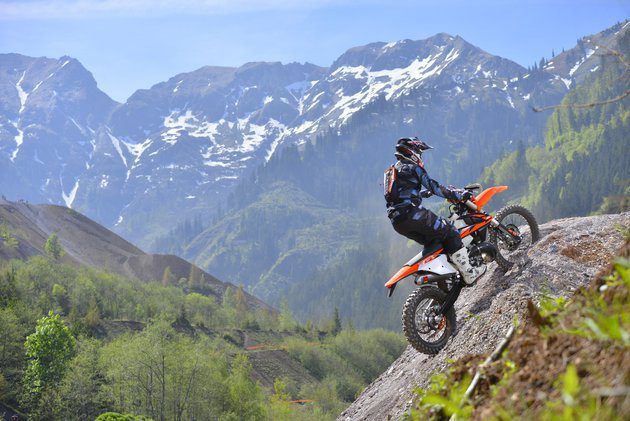
Именно здесь, в самых экстремальных условиях, КТМ прошел интенсивные испытания в прошлом году. Андреас ЛеттенбихлерЗаводской гонщик и пилот-испытатель признались, что были шокированы тем фактом, что им не требовалась настройка двигателя для гонки Roof of Africa, которая проходит высоко в горах Южной Африки: «Обычно мы тратили по крайней мере один день, чтобы оптимально настроить двигатель для гонки, что очень требовательно в этой области, поскольку перепады высоты очень велики, а плохая регулировка может привести не только к неисправности двигателя, но и к отказу двигателя. Двухтактный двигатель также должен получать немного топлива во время спуска для смазки двигателя, иначе он может заблокироваться. На этот раз днем мы пили пиво в тени рядом с отелем ».
KTM в настоящее время занимает первое место в мире внедорожных мотоциклов, и они не намерены отказываться от своего превосходства. Поэтому они много работали и отбросили по крайней мере три заблуждения, которые не проявились на поле (кто знает, сколько они от нас скрывали), но теперь они очень гордятся тем, что они приготовили. Справедливо!
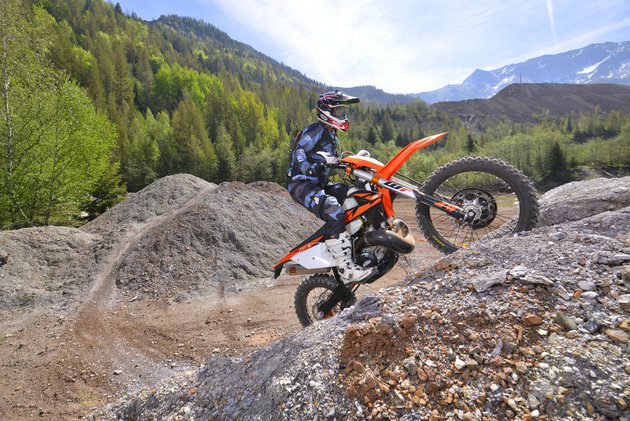
По крайней мере, судя по первому впечатлению, я могу сказать, что это лучший двухтактный двигатель эндуро, на котором я ездил за свою 20-летнюю карьеру журналиста. Насколько они верят в новые модели, подтверждается тем фактом, что нас привезли на печально известную гору Эрцберг, где KTM пережила необычайный успех, и после целого дня пыток на сложной и крутой местности я могу признаться, что был напуган больше, чем когда-либо. на мотоцикле эндуро, но в то же время могу только поздравить разработчиков, которые сделали первый в мире двухтактный двигатель эндуро с непосредственным впрыском топлива. Двухтактный двигатель приводится в действие системой Dell’Ort диаметром 39 мм со смесью бензина и масла для смазки поршня, цилиндра и главного вала. Масло переливается в отдельную емкость. (0,7 литра) и достаточно для От 5 до 6 заправок, который принимает 9 литров чистого бензина.
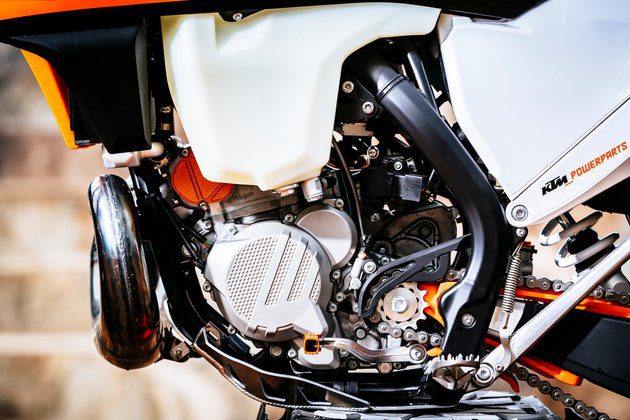
Моторная электроника — это «мозг» работы двигателя
Электроника двигателя, расположенная под сиденьем, представляет собой чрезвычайно сложную систему, которая определяет время зажигания и количество топлива на основе информации, которую она получает от манометра, положения рычага дроссельной заслонки и температуры масла и охлаждающей жидкости. Таким образом, драйвер не требует регулировки, остается только старый. кнопка холодного пуска. В зависимости от нагрузки двигателя электроника постоянно определяет соотношение смеси, что на практике означает, что расход масла снижается вдвое, а расход топлива даже на 30 процентов. В течение дня, когда мы обычно останавливались для фотосъемки и обеда, KTM EXC 300 и 250 TPI потребляли менее 9 литров бензина.
Проехали участки с гонки Red Bull Hare Scramble.
На железной горе ее размеры сначала поражают, вызывают уважение, но, поднимаясь по крутым склонам, в первую очередь задумываешься, можно ли вообще здесь проехать. Но когда вы видите, что кто-то уже проехал впереди вас по тому же склону, вы ложитесь, набираетесь храбрости и открываете газ. Ехали по множеству узких и очень техничных дорожек, где раздражали корни или даже кусок забытой железной трубы, приходилось все время быть начеку, потому что все очень непредсказуемо и может подождать яма или крутой спуск или подъем за поворотом.
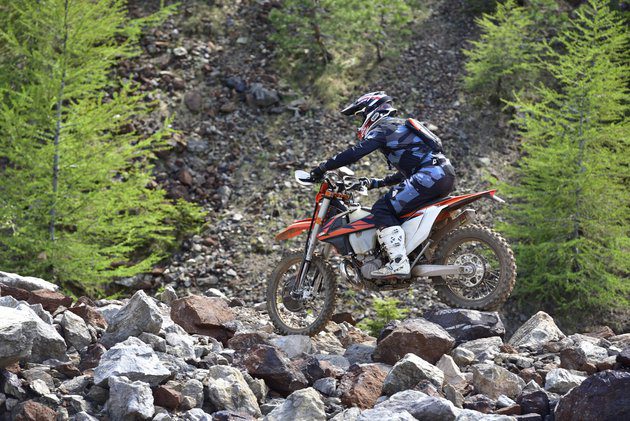
Тогда есть камни, в этом действительно нет недостатка. Над огромными скалами на разрезе ‘Ужин Карла’ К счастью, я проехал только ровную часть, и мы с коллегой из Финляндии попробовали восхождение под громкие аплодисменты других, более сообразительных журналистов, которые наблюдали за всем безопасно с расстояния, и каждый закончил с перевернутым двигателем. Здесь я могу похвалить качество пластика и новую защиту радиаторов (новая и более прочная конструкция, не требующая дополнительной алюминиевой защиты), так как мотоцикл не был поврежден. Прежде всего, на первый план вышли точность гидравлического сцепления, полезная мощность, малый вес и отличная подвеска.
Однако максимальная мощность и точность управления вышли на первый план, когда я наматывал газ на второй или третьей передаче в, казалось бы, невозможные подъемы, такие как печально известный «трубопровод». Не буду терять слов на спусках, потому что они были для меня самыми страшными. Потому что, как только вы доберетесь до вершины горы высотой 1.500 футов, вам придется один раз спуститься, верно? Когда вы находитесь на вершине выступа и даже не видите, куда собираетесь пойти под собой, вам придется рыться в карманах, чтобы найти свое «яйцо **» или храбрость. Но я обнаружил, что обе новые модели эндуро предлагают больше, чем мне нужно, или, скорее, помогают мне лучше ездить в поле самостоятельно.
Поскольку классический карбюратор попрощался, температура воздуха и высота больше не вызывают головной боли, и в результате оба двигателя всегда работают оптимально.
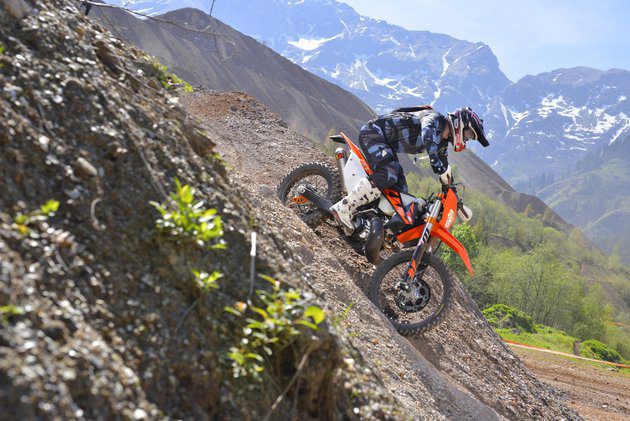
Кривая мощности чрезвычайно линейна, и тот двухтактный внезапный удар, который вызывал у большинства обычных водителей головную боль или даже пугал их, исчез. EXC 300 TPI никоим образом не скрывает своей мощности (KTM заявляет 54 ‘лошадей’) на максимальных скоростях. Вы легко ведете его на третьей передаче, и когда его нужно вытащить из поворота, он немедленно реагирует на решающее ускорение. Мощности всегда достаточно, и если вы знаете, вы можете ездить на ней очень быстро. Возможно, что более важно: вы также можете ошибиться на нем у подножия подъема, так как крутящий момент и мощность сэкономят вас, если вы не обладаете знаниями как мастер Джонни Уокер.
EXC 250 TPI немного слабее, чем 250, но больше всего он показывает эту разницу в мощности при движении по самым крутым склонам. Здесь разница: если вы ошиблись под холмом, гораздо сложнее набрать необходимую скорость и инерцию, чтобы вывести вас на вершину. Чуть меньшая мощность по сравнению с 300 успешно компенсируется более легким управлением на более технически сложной местности и в тестах эндуро на изгибах, а также на узких и извилистых трассах, где влияние вращающихся масс в двигателе менее заметно. Легче переходить от поворота к повороту или преодолевать препятствия в руках.
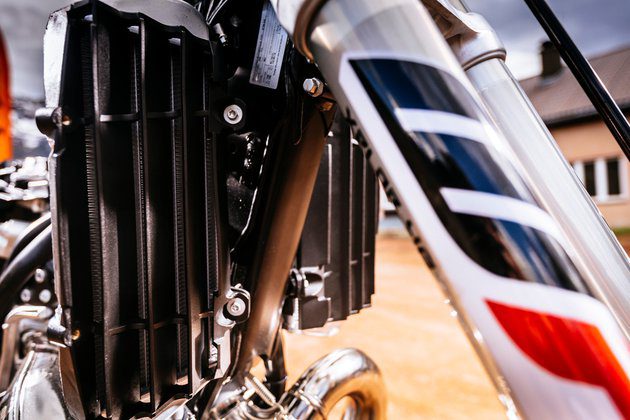
Эргономика, подвеска, тормоза и качество, как в конструкции, так и в используемых компонентах, находятся на высшем уровне. Руль от Neken, подвеска WP, рычаги Odi с системой затяжки винта, колеса Giant с фрезерованной ступицей с ЧПУ, топливный бак прозрачный и имеет встроенный топливный насос и датчик уровня топлива. Крестовины из кованого железа позволяют регулировать до четырех положений руля. Однако, если всего этого вам недостаточно, у вас есть улучшенная версия с дополнительным оборудованием. Шесть дней, который на этот раз изображен на графике французского флага, так как гонка пройдет осенью во Франции.
Поэтому я тоже как-то понимаю, что цена в хорошие девять тысяч как-то оправдана, но с другой стороны это отражение ситуации на рынке. Двухтактные KTM для эндуро традиционно распродаются первыми каждый год, и я боюсь, что эти оранжевые специальные предложения для эндуро разойдутся, как теплые булочки. Они приходят в салоны в Копере и Гросупле в конце июня или самое позднее в начале июля. Первую небольшую серию уже получили все, кто будет участвовать в гонках в Румынии и Эрцберге.
Петр Кавчич
фото: Себас Ромеро, Марко Кампелли, KTM
Техническая информация
Двигатель (EXC 250/300 TPI): одноцилиндровый, двухтактный, жидкостного охлаждения, 249 / 293,2 см3, впрыск топлива, электрический и ножной запуск двигателя.
Коробка передач, привод: 6-ступенчатая коробка передач, цепь.
Каркас: трубчатый, хром-молибденовый 25CrMo4, двойная клетка.
Тормоза: передние дисковые 260 мм, задние дисковые 220 мм.
Подвеска: передняя регулируемая перевернутая телескопическая вилка WP Xplor 48 мм, ход 300 мм, задний регулируемый одиночный амортизатор WP, ход 310 мм, крепление PDS.
Gume: 90/90-21, 140/80-18.
Высота сиденья (мм): 960 мм.
Топливный бак (л): 9 л.
Колесная база (мм): 1.482 мм.
Чай (кг): 103 кг.
Продажи: Axle Koper тел .: 30 377 334 Seles Moto Grosuplje тел .: 041 527 111
Цена: 250 EXC TPI — 9.329 300 евро; 9.589 EXC TPI — XNUMX евро

KTM MOTORCYCLE ERROR CODES DTC
DTC (Code) — Blink code — Signal / Component — Description of error Engine
P0201 33 Injection valve, rear cylinder Malfunction Stalls
P0202 34 Injection valve, front cylinder Malfunction Stalls
P0351 37 Ignition coil, rear cylinder Malfunction Stalls
Р0З52 38 Ignition coil, front cylinder Malfunction Stalls
Р0З35 02 Pick up Malfunction Stalls
P0032 45 Lambda probe heater Short circuit to positive Continues to run
P0031 45 Lambda probe heater Kurzschluß nach Masse Continues to run
P0130 17 Lambda probe, rear cylinder Malfunction Continues to run
P0052 46 Lambda probe heater, front cylinder Short circuit to positive Continues to run
P0051 46 Lambda probe heater, front cylinder Short circuit to ground Continues to run
P0150 18 Lambda probe heater, front cylinder Malfunction Continues to run
P0122 06 Throttle position sensor Output signal too low (interruption) Continues to run
P0123 06 Throttle position sensor Output signal too high (short circuit) Continues to run
P0107 09 Manifold air pressure sensor, rear cylinder Output signal too low (interruption) Continues to run
P0108 09 Manifold air pressure sensor, rear cylinder Output signal too high (short circuit) Continues to run
P1106 68 Manifold air pressure sensor, rear cylinder Hose pulled off/defective, no vacuum Continues to run
P1687 11 Manifold air pressure sensor, front cylinder Output signal too low (interruption) Continues to run
1688 11 Manifold air pressure sensor, front cylinder Output signal too high (short circuit) Continues to run
P1105 69 Manifold air pressure sensor, front cylinder Hose pulled off/defective, no vacuum Continues to run
P1107 14 Ambient air pressure sensor Output signal too low (interruption) Continues to run
P1108 14 Ambient air pressure sensor Output signal too high (short circuit) Continues to run
P0112 13 Air temperature sensor Output signal too low (interruption) Continues to run
P0113 13 Air temperature sensor Output signal too high (short circuit) Continues to run
P0117 12 Coolant temperature sensor Output signal too low (interruption) Continues to run
P0118 12 Coolant temperature sensor Output signal too high (short circuit) Continues to run
P1232 41 Fuel pump relay Short circuit to positive Stalls
P1231 41 Fuel pump relay Short circuit to ground Stalls
P0413 54 Secondary air valve Short circuit to positive Continues to run
P0414 54 Secondary air valve Short circuit to ground or interruption Continues to run
P0222 07 Sensor for 2nd throttle valve Output signal too low (interruption) Continues to run
P0223 07 Sensor for 2nd throttle valve Output signal too high (short circuit) Continues to run
P0638 72 Stepper motor for 2nd throttle valve Malfunction Continues to run
P0505 49 Idle speed control motor Malfunction Continues to run
P1631 15 Roll angle sensor Output signal too low (interruption) Continues to run
P1632 15 Roll angle sensor Output signal too high (short circuit) Continues to run
P0560 24 Control unit voltage supply Malfunction Continues to run
P1590 25 Side stand switch Output signal too low (short circuit to ground) Continues to run
P0603 65 EEPROM error Malfunction Continues to run
Информация, представленная на Сайте, носит информационный характер и ни при каких условиях не является публичной
офертой, определяемой положениями статьи 437 Гражданского кодекса Российской Федерации. Все содержащиеся на
Сайте сведения носят исключительно информационный характер и не являются исчерпывающими. Все условия
приобретения мототехники, цены, спецпредложения и комлектации мототехники указаны с целью ознакомления.
Комплектации и цены действительны на момент публикации и могут быть изменены без предварительного оповещения.
Представленная на Сайте мототехника может быть укомплектована дополнительным оборудованием, не входящим в
стандартную версию, но доступным за дополнительную плату. Сведения о продукции, касающиеся объёмов поставки,
внешнего вида, характеристик, габаритов и веса, эксплуатационных затрат и т.д. не являются обязательными,
рассматриваются как приблизительные и указаны с условием того, что могут возникнуть ошибки при печати, настройке
и/или наборе текста. Такая информация может быть изменена без предварительного уведомления. Чтобы получить
полную информацию о продукции, услугах, дополнительном оборудовании и спецпредложениях, интересных для Вас,
обращайтесь к менеджерам Дилерского центра
A A A A


Тема: Коды и расшифровка ошибок КТМ (Прочитано 11345 раз)
0 Пользователей и 1 Гость просматривают эту тему.
Люди добрые, ай нид хелп!! Сегодня замутил эндуро покатуху на 6 часов почти нон стоп. На пути возвращения домой увидел что горит лампа ФИ. Точнее так: на холостых моргала циклом по 9 миганий, чуть трогаю ручку газа-горит постоянно. Проехав еще с час, лампочка стала гореть постоянно. При резком откручивании газули хотя бы на четверть мот глохнет с хлопком. До выезда такого точно не было, в смысле не глох. Лампочку не видел, так как она подушкой закрыта. Чтож это? Рыжий очень понравился, но честно говоря немного расстроился, что в первую же норм покатуху он зубы показал. КЛАПАНА в допусках, инжектор чистый.

Записан
Ах да, коль о бензонасосе заговорил, то подскажите как без спешл тулов давку померить?
Записан
ошибка мап сенсора. кто ни будь сталкивался?
Записан
а там есть мап сенсор ? может IAP ? это датчик разрежения тока моргать должно 1-7 а не 9 подряд
ваще чекэнджини моргает комбинацию из двух цыфирей навсех нормальных машинах и мотоциклах ,хз мож ктм на своей волне?
Записан
это прафесия такая : Routing Information Typical Traffic ну а сокращенно ritt
manifold absolut pressure sensor 9 раз моргать должен. в юзверь мануале нашел
Записан
вупуфу!!!))))))))) дело было не в бабине)) клема отстегнулась.
Записан
Страницы: [1] Вверх
-
Contents
-
Table of Contents
-
Troubleshooting
-
Bookmarks
Quick Links
250/300/380 SX,MXC,EXC
REPAIR MANUAL
ENGINE
KTM SPORTMOTORCYCLE AG
5230 Mattighofen
Austria
www.ktm.at
Related Manuals for KTM EXC
-
Motorcycle KTM 125 EXC, EXC SIX DAYS, 200 XC, XC-W, EXC, 250 XC, XC-W, EXC, EXC SIX DAYS, 300 XC, XC-W, EXC-E, EXC-E SIX DAYS Owner’s Manual
Ktm owner’s manual motorcycle 125 exc, exc six days 200 xc, xc-w, exc 250 xc, xc-w, exc, exc six days 300 xc, xc-w, exc-e, exc-e six days (74 pages)
-
-
-
-
-
-
-


Summary of Contents for KTM EXC
-
Page 1
250/300/380 SX,MXC,EXC REPAIR MANUAL ENGINE KTM SPORTMOTORCYCLE AG 5230 Mattighofen Austria www.ktm.at… -
Page 3
250 — 380 SX,MXC,EXC REPAIR MANUAL ENGINE… -
Page 5: Table Of Contents
1 SERVICE-INFORMATIONS 2 GENERAL INFORMATION 3 REMOVING AND REFITTING ENGINE 4 DISASSEMBLING THE ENGINE 5 SERVICING ON INDIVIDUAL COMPONENTS 6 ASSEMBLING THE ENGINE 7 ELECTRICAL 8 TROUBLE SHOOTING 9 TECHNICAL SPECIFICATIONS 10 PERIODIC MAINTENANCE SCHEDULE 11 WIRING DIAGRAMS…
-
Page 7
5-13 to 5-14 10-1 11-1 KTM REPAIR MANUAL IN LOOSE-LEAF FORM STORING THE REPAIR MANUAL IN THE BINDER – Put the index into the binder. – Put the front page of the repair manual (210×297 mm) into the transparent pocket provided for this purpose on the outside of the binder. -
Page 9
3.206.004-E Updating of Rep.Manual 3.205.63-E Modelyear 2003 (Engine number with first digit “3“) Modification / Updating: Technical Specification, Periodic Maintenance Schedule, Wiring Diagrams P D AT I N G 250 / 300 / 380 SX, MXC, EXC 11/1998 2/2000 3/2001 11/2002 Edition 11/2002… -
Page 11
„NOTE” POINTS OUT USEFUL TIPS. Use only ORIGINAL KTM SPARE PARTS when replacing parts. The KTM high performance engine is only able to meet user expectations if the maintenance work is performed regularly and professionally. KTM Austria’s certificate of achievement for its quality system ISO 9001 is the beginning of an on going total reengineered quality plan for a brighter tomorrow. -
Page 13
REPLY FAX FOR REPAIR MANUALS We have made every effort to make our repair manuals as accurate as possible but it is always possible for a mistake or two to creep in. To keep improving the quality of our repair manuals, we request mechanics and shop foremen to assist us as follows: If you find any errors or inaccuracies in one of our repair manual –… -
Page 14: Table Of Contents
2-1C GENERAL INFORMATION INDEX OPERATING RANGES OF THE CARBURETOR ….2-2 CARBURETOR ADJUSTMENT ……2-3 CHECKING OF THE SETTING OF THE TVC SYSTEM .
-
Page 16: Operating Ranges Of The Carburetor
OPERATING RANGES OF THE CARBURETOR mixture too lean: not enough fuel in proportion to air mixture too rich: too much fuel in proportion to air Idling range Operation with closed throttle valve. This range is influenced by the position of the air control screw .
-
Page 17: Carburetor Adjustment
2-3C Carburetor adjustment Basic information on the original carburetor setting The original carburetor setting was adapted for an altitude of approx. 500 meters (1600 ft.) above sea level, and the ambient temperature of approx. 20° C (68° F), mainly for off-road use and central European premium-grade fuel (ROZ 95 MOZ). Mixing ratio 2-stroke motor oil : super fuel 1:40 –…
-
Page 18: Bleeding Of The Hydraulic Clutch
Make sure that the oil does not overflow. CAUTION – H AVING COMPLETED THE BLEEDING PROCEDURE OIL LEVEL IN THE MASTER CYLINDER IS CORRECT – KTM USES BIODEGRADABLE HYDRAULIC OIL FOR THE HYDRAULIC CLUTCH CONTROL EVER MIX BIODEGRADABLE HYDRAULIC OILS WITH MINERAL OILS – A…
-
Page 19: Special Tools — Engine
2-5C SPECIAL TOOLS – ENGINE Fig. Part no. 560.12.001.000 546.29.003.000 560.12.004.000 546.29.009.044 6 276 807 510.12.011.000 544.12.012.000 584.29.037.040 584.29.037.043 510.12.016.000 546.29.012.100 501.12.013.000 501.12.030.000 6 899 785 151.12.017.000 151.12.018.100 151.12.018.000 151.12.018.200 546.29.027.000 0276 179 000 503.29.050.000 250 / 300 / 380 Description Universal engine work stand Clutch holder…
-
Page 20: Cleaning
Clean your motorcycle regularly in order to maintain the beauty of its plastic surfaces. The best manner would be to use warm water that has been mixed with a normal brand-name washing detergent and a sponge. The hard dirt can be removed before washing with the help of a soft water jet. EVER CLEAN YOUR MOTORCYCLE WITH A HIGH ELECTRICAL COMPONENTS CONNECTORS…
-
Page 22: Removing And Refitting Engine
3-1C REMOVING AND REFITTING ENGINE INDEX REMOVING THE ENGINE ……. . .3-2 REFITTING THE ENGINE .
-
Page 24
3-2C Dismounting the engine – Clean motorcycle thoroughly. – Prop up motorcycle on an appropriate stand. – Remove seat, right side paneling, and tank with spoilers. – Dismount exhaust system. – Drain coolant, and disconnect radiator hoses from engine. – Dismount engine strut –… -
Page 25
3-3C – Loosen the 3 screws, and remove intermediate flange chamber KTC system together with O-ring. – Remove engine fastening screw – Remove cable ties and loose the cable of ignition from frame. – Loosen both hose clamps, and pull caburetor out of carburetor connection boot and intake flange. -
Page 26
Refitting the engine – To install the engine, reverse the steps for removing the engine. Filling in of transmission oil: – Remove the plug and top up with engine oil 15W-50 (i. e. MOTOREX TOP SPEED 4T). – In order to check the transmission oil level the control screw clutch cover is to be removed. -
Page 28: Disassembling The Engine
4-1C DISASSEMBLING THE ENGINE INDEX DRAINING GEAR OIL ……..4-2 DISMOUNTING OF SPROCKET AND SHIFT LEVER .
-
Page 30
– Cleaning the engine thoroughly. – Clamp the engine into the workstand. – Remove the kickstarter together with the distance bushing behind. Draining gear oil NOTE: The transmission oil should already be drained when the engine is dismounted. Otherwise, the transmission oil will leak out of the drive shaft following the removal of the slave cylinder of the clutch. -
Page 31
4-3C – Undo the screws and remove the right control cover. – Remove the securing clip of the ball socket socket from the adjusting lever. – Remove gasket of the control cover. – Remove the 4 collar nuts – Cover the crankcase. –… -
Page 32
Dismounting of pressure cap and clutch discs – Loosen collar screws wedging of discs as springs expand. – Remove collar screws, springs and spring retainers. – Take pressure cap and disc package out of outer clutch hub. – Take thrust bearing off the drive shaft. -
Page 33
4-5C Dismounting of kickstarter – Remove circlip – Carefully release collar screw tension on kickstarter spring and unhook spring hanger. AREFULLY RELEASE THE KICKSTARTER SPRING – Take the complete kickstarter shaft out of the housing. – Take care of the stop disc, which could stay in the housing. Dismounting of the shift lock –… -
Page 34
Dismounting of the ignition (Kokusan) – Hold the flywheel with the holding spanner – Put the protection cover on the crankshaft thread, twist in the flywheel extractor and remove the flywheel. – Undo the 3 screws and remove the stator together with the base plate. -
Page 35
4-7C Dismounting of intake flange and reed valve housing – Remove the 5 collar screws – Remove intake flange and reed valve housing. Parting of engine housing halves – Top ignition-gear upwards and remove all 11 housing screws. – Loosen the 2 engine fixtures on the engine work stand. –… -
Page 36
– Pull out the shift rails and swing the shift forks aside. – Pull the shift roller out of the bearing seat. – Remove the shift forks. NOTE: During disassembly, watch out for the shift rollers driving pins of the shift forks. They may remain in the shift roller. Although the counter shaft shift forks are identical they should be refitted in the same position as before if reused. -
Page 37: Table Of Contents
SERVICING ON INDIVIDUAL COMPONENTS WORKING ON THE RIGHT-HAND HOUSING HALF ….5-2 WORKING ON THE LEFT-HAND HOUSING HALF ….5-3 CRANKSHAFT .
-
Page 39
Working on the right-hand housing half – Remove all shaft seal rings and use an oven to heat the casing half to approx. 150°C. Grooved ball bearing of crankshaft Press old grooved ball-bearing inwards. Press in new ball bearing to the stop. -
Page 40
5-3C Working on the left-hand housing half – Remove all shaft seal rings and use an oven to heat the casing half to approx. 150°C. Crankshaft roller bearing Press old roller bearing inwards, press in new ball bearing to the stop with the open side of ball cage downwards (outside). -
Page 41: Crankshaft
Crankshaft – When replacing the roller bearing, the inner crankshaft ring must also be renewed. – Heat special tool 584.29.037.040 on a heating pad up to approx. 150°C and slip it on the inner ring immediately. Press the special tool together tightly so as to obtain a good heat transfer and pull the inner ring off the crankshaft.
-
Page 42: Checking Cylinder For Wear
5-5C 10mm Checking cylinder for wear Measure diameter of cylinder approx. 10 mm (0.4 in.) below top of cylinder edge. Check diameter in several corresponding places to see if cylinder in worn oval. Engine Cylinder Ø 67,500 — 67,512 67,513 — 67,525 72,000 — 72,012 72,013 — 72,025 78,000 — 78,012…
-
Page 43: Cylinder Preassembly
only 250 Cylinder exhaust control system Dismantle and clean all exhaust control components, check for signs of wear and damage. Control rollers – Check clearance of bearings. Remove oil-derived deposits. Check toothing of control rollers for signs of wear. Gear segments –…
-
Page 44
5-7C – Mount and grease silicon O-rings (15×1,50 mm) – Slightly grease the bearing sleeves – Mount toothed segments (the toothed segment with the cylindrical pin has to be mounted on the right side). – On the right-hand side, mount bearing bushing spring with short leg on outside and spring sleeve –… -
Page 45: Exhaust Control, Clutch Cover
LOCTITE 243 LOCTITE 243 Exhaust control, clutch cover – Remove screws and take off the bearing support. – Take cup tappet , adjusting spring clutch cover. – Take off water pump cover, remove allen head screw water pump wheel – The centrifugal timer can be pulled out of the bearing.
-
Page 46: Reed Valve Housing, Intake Flange
5-9C Reed valve housing, intake flange NOTE: Reed paddles gradually lose tension through operation, resulting in power loss. Damaged or worn reed paddles must be replaced. If the reed sealing surfaces of the reed valve housing are also damaged, replace the complete reed valve housing. CAUTION 243.
-
Page 47
5-10C 13,5 mm LOCTITE 242 Clutch Thrust bearing check for wear Push rod Check for wear. Minimum length: 199 mm (new: 199.80 mm) Clutch springs New spring length 42,5 mm / 1.7 in (new 43 mm / 1.73 in). Replace all 6 springs if applicable. 9 Lining discs Minimum thickness 2.60 mm (0.102 in) / new disc 2.70 mm (0.106 in). -
Page 48: Replace Outer Clutch Hub
5-11C Replace outer clutch hub – Drill open the clutch rivets remove parts. – Check 8 absorbing elements replace all 8 where applicable. HE ABSORBING ELEMENTS ARE WIDER THAN THE PRIMARY GEAR CROWN THAT THE OUTER CLUTCH HUB ON THE PRIMARY GEAR CROWN TENSION WITH THE CLUTCH RIVETTING TOOL in area of retaining bracket for signs of mechanical damage,…
-
Page 49: Shift Mechanism
LOCTITE 243 LOCTITE 243 0,40 — 0,80 mm LOCTITE 243 Shift mechanism Shift forks Check shift fork blades and shift roller driving pin Shift roller Check shift grooves for wear. Check position of shift roller in grooved ball bearings Slide plate Check slide plate at meshing points Check return surface for wear (renew, if strongly notched).
-
Page 50: Ignition (Kokusan)
5-13C Kokusan 2K-1/2K-4 Kokusan 2K-2 Kokusan 2K-3 Ignition (Kokusan) General information The measurements described below will only reveal severe problems. Coil short circuits leading to weak ignition sparks or low generator output, respectively, can only be detected with the help of an ignition test bench. In the case of malfunction always check the cables and the plug and socket connections of the ignition system first.
-
Page 51: Ignition (Sem)
Ignition (SEM) General information The measurements described below will only reveal severe problems. Coil short circuits leading to weak ignition sparks or low generator output, respectively, can only be detected with the help of an ignition test bench. In the case of malfunction always check the cables and the plug and socket connections of the ignition system first.
-
Page 52: Assembly Mainshaft
5-15C Transmission Secure mainshaft or countershaft in the vice (using soft jaw-covers). Remove gears and check the following for wear: – Needle bearing – Mainshaft and countershaft pivot points including idler gears – Shift dogs and gear wheels – Tooth faces of all gears –…
-
Page 53: Assembly Countershaft
Transmission Secure mainshaft or countershaft in the vice (using soft jaw-covers). Remove gears and check the following for wear: – Needle bearing – Mainshaft and countershaft pivot points including idler gears – Shift dogs and gear wheels – Tooth faces of all gears –…
-
Page 54: Assemble Of Kickstarter Shaft
5-17C LOCTITE 243 LOCTITE 243 Kickstarter Starter gear Check clearance of starter gear. Starter intermediate gear Check clearance of starter intermediate gear. Locking pawl Check for signs of wear and damage. Kickstarter shaft Check for signs of wear and damage. For changing the locking pawl, press bearing needle kickstarter shaft.
-
Page 55: Table Of Contents
6-1C ASSEMBLING THE ENGINE INDEX CRANKSHAFT ………6-2 TRANSMISSION .
-
Page 57
– Secure the right-hand housing half in the engine work stand. Crankshaft – Insert crankshaft from above through grooved ball bearing and push carefully as far as stop. HEN PUSHING IN CRANKSHAFT Transmission – Grease the driving pins of the shift forks and mount the shift rollers –… -
Page 58: Assembling The Engine Housing
6-3C M6 x … – Fix the 4 pressure springs gearshift rails. – Oil gearshift rails and insert them into the gearshift forks (short gearshift rail toward drive shaft). Insert gearshift rails into the casing bores as far as they will go. NOTE: It must now be possible to gently turn gear shafts.
-
Page 59: Mounting Shift Mechanism
Mounting shift mechanism – Place locating spring with bent leg upwards into engine housing. – Insert collar sleeve into spring with collar upwards. – Coat collar screw – Insert locating lever screw. – Hook locking spring must abut the casing nose –…
-
Page 60: Mount Primary Drive And Clutch
6-5C Mount primary drive and clutch – Grease crankshaft seal ring. – Put the oiled O-ring (25×1.50 mm) onto the crankshaft and mount the distance bushing with the chamfer facing the crank web. – Insert woodruff key into crankshaft. – Place primary gear –…
-
Page 61: Mounting Clutch Discs And Pressure Cap
M6x … Mounting clutch discs and pressure cap – Oil the thrust bearing , and slide it over the drive shaft. – Oil lining discs before mounting. – Beginning with one lining disc, mount alternately 9 lining discs ( 2.70 mm / 0.10 in) and 8 intermediate discs ( 1.20 mm / 0.047 in), with a lining disc forming the final layer upwards.
-
Page 62: Mounting Piston And Cylinder
6-7C Mounting piston and cylinder – Before assembly, oil all parts thoroughly at the sliding points. – Insert needle bearing in conrod eye, mount piston (arrow on piston head shows direction for exhaust duct). – Mount piston pin and wire circlips with open side showing downwards (see sketch).
-
Page 63
control flap Adjusting control flap (dimension “Z“) Note: Dimension “Z“ is the distance from the lower edge of the control flap to the upper edge of the cylinder, as measured in the centre of the exhaust port. 250 Model 1999 : 48,0 mm 250 Model 2000 : 50,5 mm 250 ab Model 2001 : 49,5 mm 300 : 46,0 mm… -
Page 64: Mounting Steering Covers
6-9C Mounting steering covers – Mount the right-hand control cover – Place gasket in position and fix left-hand steering cover Mounting cylinder head – Clean cylinder and cylinder head sealing surface, place O-rings in grooves. – Mount cylinder head with water nozzle on the exhaust side. –…
-
Page 65: Mounting Engine Sprocket
Mounting engine sprocket – Lubricate O-ring with oil and slide over counter shaft. – Slide distance bushing in position so that O-ring is in correct position. – Slide sprocket onto the countershaft with the collar facing inward, and fix it with the circlip (sharp edge facing outward).
-
Page 66: Mounting The Ignition (Sem)
6-11C Mounting the ignition (SEM) – Insert woodruff key into crankshaft. – Apply Loctite 243 to the threads of the 3 screws – Mount base plate – Mount the cable guide – Mount the rotor. – Mount the detent edged ring and the nut. –…
-
Page 67
CHECKING THE CAPACITOR (MOD. 2000) ….7-4 STATIC IGNITION VALUES 250 — 380 SX, EXC ….7-5 STATIC GENERATOR VALUES 250 — 380 EXC . -
Page 69
Checking the voltage regulator-rectifier (Shindengen) – Start the engine and switch on the low beam. – Connect a voltmeter to the two terminals of the capacitor (red/white cable = positive, brown cable = negative). – Accelerate the engine to a speed of 5000 r.p.m. and read off the voltage. -
Page 70
7-3C Checking the capacitor – Discharge the capacitor by bridging the two terminals with a screwdriver and remove. – Connect the negative pole of a 12V battery with the negative terminal of the capacitor. The connection between the positive pole of the battery and the positive terminal of the capacitor (marked +) is made with a test lamp –… -
Page 71
Checking the voltage regulator – Start the engine and switch on the low beam. – Connect a voltmeter to the two terminals of the capacitor. – Accelerate the engine to a speed of 5000 r.p.m. and read off the voltage. In the case of a significant deviation from the nominal value: –… -
Page 72
7-5C STATIC IGNITION VALUES 250-380 SX, EXC (KOKUSAN 2K-1, 2K-3, 2K-4) Measuring conditions: – cold engine – seat and tank removed – all connectors and the ground connection in a non-corroding condition, connectors tightly connected – spark plug screwed out and spark plug connector attached to ground –… -
Page 73
7-6C 250-380 EXC 2000 S P O R T M O T O R C Y C L E S… -
Page 74
NOTE: – the black measuring lead applied to the ground. – 300/380 USA corresponds to 300/380 EXC Europe but with less accessories (blinkers, horn, no capacitor installed). Features no rectifi- cation, only an over-voltage regulation. (also see circuit diagram on opposite… -
Page 75
7-8C 250-380 EXC 2000 S P O R T M O T O R C Y C L E S… -
Page 76
7-9C STATIC IGNITION AND GENERATOR VALUES 250 MXC, EXC USA (KOKUSAN 2K-2) Measuring conditions: – cold engine – seat and tank removed – all connectors and the ground connection in a non-corroding condition, connectors tightly connected – spark plug screwed out and spark plug connector attached to ground –… -
Page 77
7-10C 250 EXC 2001… -
Page 79
8-1C TROUBLE SHOOTING INDEX TROUBLE SHOOTING 250 — 380 ……8-2… -
Page 81: Trouble Shooting
If you let the specified maintenance work on your motorcycle be carried out, disturbances can hardly be expected. Should an error occur nevertheless, we advise you to use the trouble shooting chart in order to find the cause of error. TROUBLE Engine fails to start Operating error…
-
Page 82
8-3C TROUBLE Engine has not enough Reed paddles tensionless or dama- power ged, surface of reed valve housing damaged Wear Electronical ignition timing faulty Engine revs not high and Carburetor overflows if level adjust running with four stroke too high, float needle seating is cycle dirty or enlarged Loose carburetor jets… -
Page 83: Technical Specifications
9-1C TECHNICAL SPECIFICATIONS INDEX MODEL 1999 ENGINE 250 — 380 USA ……..9-2 ENGINE 250 — 380 .
-
Page 85
9-2C… -
Page 86
60 Nm (44 ft.lb) 8 Nm (6 ft.lb) 100 Nm (74 ft.lb) 10 Nm (7 ft.lb) 25 Nm (19 ft.lb) 45 Nm (33 ft.lb) 0.08 mm (380) 380 SX, MXC, EXC Keihin PWK 38 070598 170(168,172,175) 48(45,50) NOZ H(NOZ G,NOZ I) 1,5 Umdr. -
Page 87
9-4C… -
Page 88
100 Nm (74 ft.lb) (14 ft.lb) 10 Nm (7 ft.lb) 25 Nm (19 ft.lb) 45 Nm (33 ft.lb) 380 EGS 380 SX, MXC, EXC AUSTRALIA Keihin PWK 38 Keihin PWK 38 070598 060598 170(168,172,175) 175(168,170,172) 48(45,50) 45(48,50) NOZ H(NOZ G,NOZ I) NOZ G(NOZ H,NOZ I) 1,5 Umdr. -
Page 89
TECHNICAL SPECIFICATIONS CHASSIS 250 / 300 / 380 SX / MXC / EXC / EGS ‘99 250/380SX Frame Fork Wheel travel front/rear Rear suspension Front brake Rear brake Front tires 80/100 — 21“ 51M – Air pressure offroad 1.0 bar (14 psi) Air press. -
Page 90
9-7C… -
Page 91
9-8C… -
Page 92
9-9C… -
Page 93
9-10C… -
Page 94
10 Nm (7 ft.lb) 25 Nm (19 ft.lb) 45 Nm (33 ft.lb) 0.06 mm (300) 0.08 mm (380) 300 MXC, EXC 380 SX, MXC, EXC Keihin PWK 38 AG Keihin PWK 38 AG 140499 150499 175 (172,178) 170 (168,172) 45 (48) -
Page 95
9-12C… -
Page 96
Loctite 648 19 Nm (14 ft.lb) 10 Nm (7 ft.lb) 25 Nm (19 ft.lb) 45 Nm (33 ft.lb) 0.08 mm (380) 250/300 EXC 380 SX, MXC, EXC throttled Keihin PWK 38 AG Keihin PWK 38 AG 150499 050799 170 (168,172) -
Page 97
Rebound adjuster Spring PDS3–250 Spring preload 5 mm (0.2 in) 250/300/380 SX, MXC, EXC 2000 250/300/380 MXC Central chrome-moly-steel frame White Power – Up Side Down 43 MA 295/320 mm (11,3/12,6 in) WP Progressive Damping System shock absorber, aluminium swingarm Disc brake with carbon-steel brake disc Ø… -
Page 98
9-15C 21.06.99… -
Page 99
9-16C 21.06.99… -
Page 100
9-17C 21.06.99… -
Page 101
9-18C 21.06.99… -
Page 103
9-19C… -
Page 104
Loctite 648 19 Nm (14 ft.lb) 10 Nm (7 ft.lb) 25 Nm (19 ft.lb) 45 Nm (33 ft.lb) 300 MXC, EXC 380 SX, MXC, EXC Keihin PWK 38 AG Keihin PWK 38 AG 050300 070300 175 (172,178) 170 (168,172) 45 (48) 45 (48) -
Page 105
9-21C… -
Page 106
Ø 2.5 new = 43 mm, minimum length = 42 mm 0.5 mm 0.5 mm as required 0.2/0.4/ 0.5 / 0.75 mm O-rings 250 EXC AUS 300 EXC AUS throttled throttled Keihin PWK 38 AG Keihin PWK 38 AG 040300… -
Page 107
Rebound adjuster Spring PDS7–265 Spring preload 5 mm (0.2 in) 250/300/380 SX, MXC, EXC 2001 250/300/380 MXC Central chrome-moly-steel frame White Power – Up Side Down 43 MA 295/320 mm (11,3/12,6 in) WP Progressive Damping System shock absorber, aluminium swingarm Disc brake with carbon-steel brake disc Ø… -
Page 108
9-24C… -
Page 109
9-25C… -
Page 110
9-26C… -
Page 111
9-27C… -
Page 112
9-28C… -
Page 113
35 Nm (25 ft.lb) 60 Nm (44 ft.lb) 8 Nm (6 ft.lb) 10 Nm (7 ft.lb) 25 Nm (19 ft.lb) 45 Nm (33 ft.lb) 380 SX, MXC, EXC Keihin PWK 38 AG 050201 170 (168,172) 45 (48) NOZ G (NOZ H) – –… -
Page 114
9-30C… -
Page 115
NOZ E (NOZ F/D) Needle position from top Slide Air adjustment screw open Performance restrictor – Power jet jet – BASIC CARBURETOR SETTING 250 EXC USA Carburetor Keihin PWK 38 AG Carburetor setting number 030201 Main jet 178 (175,180) Idling jet 45 (48) -
Page 116
Rebound adjuster Spring PDS7–260 Spring preload 4 mm (0.16 in) 250/300/380 SX, MXC, EXC 2002 250/300/380 MXC Central chrome-moly-steel frame 295/320 mm (11,3/12,6 in) WP Progressive Damping System shock absorber, aluminium swingarm Disc brake with carbon-steel brake disc Ø 260 mm (10.2 in), brake caliper floated Disc brake with carbon-steel brake disc Ø… -
Page 117
9-33C… -
Page 118
9-34C… -
Page 119
9-35C… -
Page 120
9-36C… -
Page 121
9-37C… -
Page 122
(6 ft.lb) 100 Nm (74 ft.lb) 10 Nm (7 ft.lb) 25 Nm (19 ft.lb) 45 Nm (33 ft.lb) 300 EXC AUS 300 MXC / EXC throttled Keihin PWK 38 AG Keihin PWK 38 AG 130202 150202 175 (172,178) 175 (172,178) -
Page 123
5 mm (0.20in) Air chamber length 110 mm (4,3 in) Fork oil SAE 5 250/300 MXC, EXC 2003 250/300 MXC Central chrome-moly-steel frame White Power – Up Side Down 48 MA 300/335 mm (11.8/13.2 in) WP PDS 5018 (Progressive Damping System) shock absorber, aluminium swingarm Disc brake with carbon-steel brake disc Ø… -
Page 124
9-40C Collar screw, front wheel spindle Brake caliper, front Brake disk, front Brake disk, rear Clamping screws, upper fork bridge Clamping screws, lower fork bridge Clamping screws, fork stubs Collar nut, rear wheel spindle Hexagon nut, swing arm bolt Hexagon collar screw, handlebar clamp Allan head screw, handlebar support Shock absorber, top Shock absorber, bottom… -
Page 125
9-41C… -
Page 126
9-42C… -
Page 127
10-1C LUBRICATION AND MAINTENANCE SCHEDULE INDEX MODEL 1999 LUBRICATION AND MAINTENANCE SCHEDULE 250 — 380 ..10-2 MODEL 2000 LUBRICATION AND MAINTENANCE SCHEDULE 250 — 380 ..10-3 MODEL 2001/2002 LUBRICATION AND MAINTENANCE SCHEDULE 250 — 380 . -
Page 129
PERIODIC LUBRICATION AND MAINTENANCE SCHEDULE AT A REGULAR COMPETITION USE OF THE BIKE, THE 4000 KM (2500 MILES) SERVICE IS TO BE DONE AFTER EVERY RACE Check transmission oil level Change transmission oil Check spark plug and electrode gap Change spark plug Functional testing of the exhaust control system Check intake manifold for leaks and cracks Drain and clean carburetor float chamber… -
Page 131
PERIODIC LUBRICATION AND MAINTENANCE SCHEDULE AT A REGULAR COMPETITION USE OF THE BIKE, THE 4000 KM (2500 MILES) SERVICE IS TO BE DONE AFTER EVERY RACE Check transmission oil level Change transmission oil Check spark plug and electrode gap Change spark plug Functional testing of the exhaust control system Check intake manifold for leaks and cracks Drain and clean carburetor float chamber… -
Page 132
NTERVALLS SHOULD NEVER BE EXCEED BY MORE THAN AINTENANCE WORK DONE BY AINTENANCE ORK THAT CAN BE CARRIED OUT BY EXTRA ORDER AUTHORISED WORKSHOPS IS NOT A SUBSTITUTE OF CARE AND CHECKS DONE BY THE RIDER 250/300/380 SX/MXC/EXC 1. service after after after 10 hours… -
Page 133
10-5C MPORTANT HECKS AND AINTENANCE TO BE ARRIED OUT BY THE IDER Check gear box oil level Check brake fluid level Check brake pads for wear Check lights for function Check horn for function Lubricate and adjust cables and nipples Bleed fork legs regulary Remove and clean fork dust bellows regulary Clean and lubricate chain, check tension and adjust if necessary… -
Page 134: Periodic Maintenance Schedule
NTERVALS SHOULD NEVER BE EXCEEDED BY MORE THAN AINTENANCE WORK DONE BY AINTENANCE ORK THAT CAN BE CARRIED OUT BY EXTRA ORDER AUTHORISED WORKSHOPS IS NOT A SUBSTITUTE FOR CARE AND CHECKS DONE BY THE RIDER 250/300 MXC/EXC 1st service after after after 10 hours…
-
Page 135
10-7C MPORTANT HECKS AND AINTENANCE TO BE ARRIED OUT BY THE IDER Check gear box oil level Check brake fluid level Check brake pads for wear Check lights for function Check horn for function Lubricate and adjust cables and nipples Bleed fork legs regulary Remove and clean dust bellows regularly Clean and lubricate chain, check tension and adjust if necessary… -
Page 136
Replace the crankshaft bearings and conrod bearings Check the entire transmission including roller and bearings for wear NOTE: IF THE INSPECTION ESTABLISHES THAT PERMISSIBLE TOLERANCES ARE EXCEEDED, THE RESPECTIVE COMPONENTS MUST BE REPLACED. 250/300 EXC ADDITIONAL ORDER FOR THE hours 250/300 EXC… -
Page 137: Wiring Diagrams
MODEL 1999 WIRING DIAGRAM 250 — 380 EXC ……11-2 WIRING DIAGRAM 250 — 380 EGS ……11-3 WIRING DIAGRAM 250 — 380 EXC (USA) .
-
Page 139: 250-380 Exc Wiring Diagram
11-2C…
-
Page 140
11-3C… -
Page 141
11-4C… -
Page 142
11-5C… -
Page 143
11-6C… -
Page 144
11-7C S P O R T M O T O R C Y C L E S… -
Page 145
11-8C… -
Page 146: 380 Exc 2000 Wiring Diagram
11-9C…
-
Page 147
11-10C… -
Page 148
11-11C… -
Page 149
11-12C… -
Page 150
11-13C… -
Page 151
11-14C 250-300 EXC 2003… -
Page 152
11-15C KTM 250-300 EXC 2003… -
Page 153
11-16C…